
The Past Within
Rusty LakeAdventure
4.81.36K Reviews
- Version
- 7.9.1.1
- Installs
- 100.00K
- Age Rating
- Teen
Screenshots
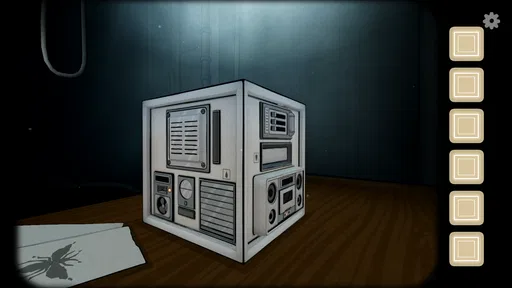
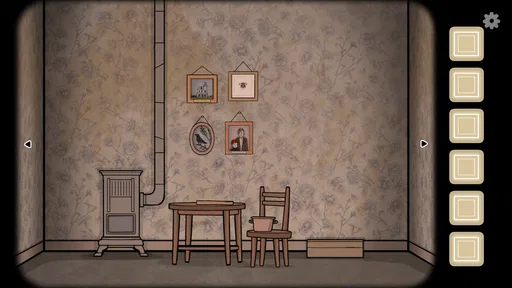
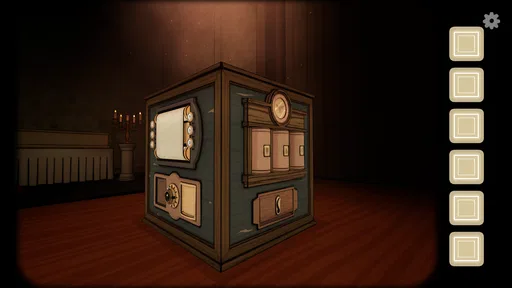
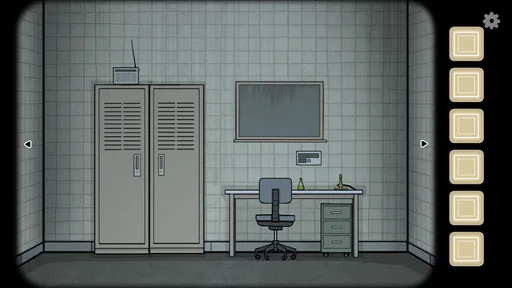
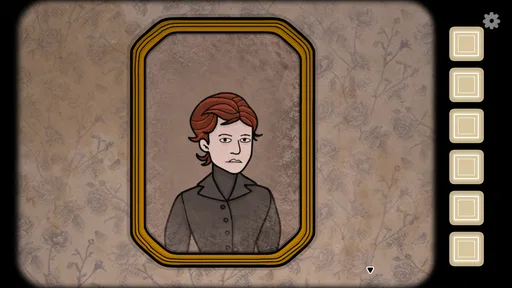
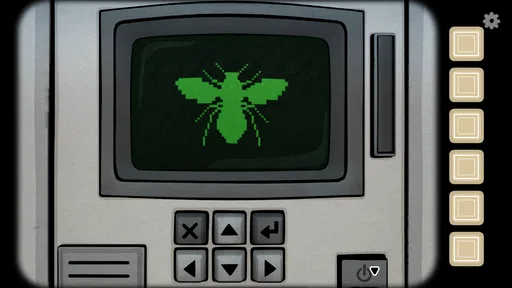
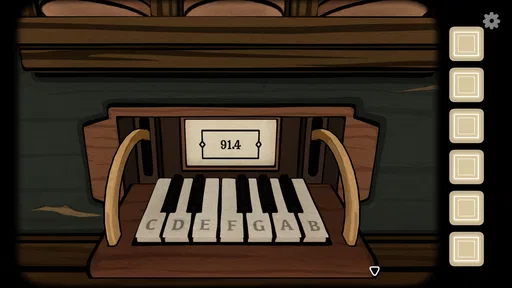
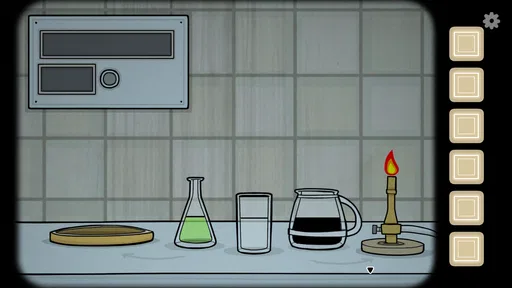
Our Review of The Past Within
 Analysis by Appyee
I approached The Past Within as both a cooperative adventure and a test of how comfortably two people can share information when they are not looking at the same clues. That distinction matters. This is not a game where one person simply watches while the other does the work. Rusty Lake builds the experience around two players occupying different points in the story, so communication is the main tool, not an optional extra.
That setup makes the game unusually interesting from an inclusive point of view. A player who enjoys careful observation may shine when examining symbols and objects, while another may be better at explaining patterns, remembering details, or keeping a conversation organized. At the same time, the format can expose barriers that are easy to miss in a normal puzzle game. If one player struggles with small visual details, fast note-taking, or describing spatial relationships, the partner has to adapt.
As an adventure game from Rusty Lake, it carries the developer’s familiar taste for strange imagery, unsettling atmosphere, and puzzles that reward interpretation rather than reflexes. I found the central idea more memorable than a standard single-player mystery, but it also demands more preparation than a casual game. You need a partner, a way to communicate clearly, and enough patience to describe what you see instead of reaching for the other person’s screen.
How the two-player design affects readability and navigation
I found that the two-player design changes more than who solves each puzzle: it makes clear descriptions part of how you move through the game. In this section, I’ll look at how that split shapes reading clues and navigating scenes, including a practical way to keep exchanges clear. That matters especially when a pair has different visual strengths or prefers different ways of communicating.
Separate information is the heart of the experience
The most important thing to understand before playing is that each person receives only part of the situation. You and your partner are expected to compare observations aloud. One player may describe a sequence, image, or arrangement while the other searches for its meaning in a different setting. The game therefore turns ordinary navigation into a conversation: “What do you see?” is often more useful than immediately tapping every object on your own screen.
I liked this structure because it gives both participants a meaningful role. In many co-op puzzle games, one player can become the driver while the other merely suggests ideas. Here, the separation of information makes that imbalance harder to sustain. Even when one person solves a connection first, the solution usually has to be explained in a way the partner can use.
The trade-off is that the game’s readability depends partly on human communication. The interface can present a clue clearly, yet the clue may still be difficult to transfer verbally. A symbol that looks obvious to one player may be hard to describe without saying whether it is rotated, mirrored, layered, or connected to another mark. I recommend agreeing on simple language before starting: describe positions from left to right, name shapes consistently, and say when a clue is being read from top to bottom.
Why a shared vocabulary helps
A small amount of organization makes a surprisingly large difference. I found it useful for each player to keep a short list of repeated symbols and the words used for them. Calling one mark “the split circle” and another “the hooked line” is better than inventing a new description every time. If you are playing remotely, a notes app or sheet of paper can reduce the pressure to remember every visual detail while switching between the game and the conversation.
This is one of the less obvious strengths of the design: it encourages players to build their own communication system. That can be enjoyable for friends who like collaborative problem-solving, and it can also help people who prefer structured discussion over rapid improvisation. The game does not require both players to think in exactly the same way. It rewards a partner who can translate visual information into clear verbal instructions.
However, the same feature can frustrate players who want immediate, self-contained feedback. If you prefer to inspect one room, solve one puzzle, and move on without depending on another person’s description, this adventure may feel unnecessarily indirect. A conventional point-and-click mystery or solo escape-room game will usually be easier to follow on your own.
Text, imagery, and the pace of inspection
The Past Within is built around examining details, so comfort with close visual inspection matters. I would not describe it as a reflex-heavy experience; the pressure comes from noticing and interpreting rather than reacting quickly. That is helpful for players who need time to think, because the cooperative conversation naturally creates pauses. You can ask your partner to repeat a clue, compare notes, or take a moment before committing to an answer.
Still, a calm pace does not automatically solve every readability issue. A player with reduced vision may find certain visual distinctions harder to identify, especially when a puzzle relies on shape, orientation, or subtle differences. In that situation, the partner can become an important second set of eyes, but this works only if both people are comfortable describing details precisely. The game’s cooperative structure offers support through teamwork, not through a substitute for visual information.
For players who use screen magnification, display enlargement, or other device-level adjustments, the practical result will depend on the phone or tablet and on how those adjustments interact with the game. I would test the opening section before planning a long session. If reading or inspecting the screen feels tiring, shorter rounds with a break between them are more realistic than trying to finish everything in one sitting.
Navigation is simple in movement, demanding in interpretation
I never felt that the main challenge was learning complicated controls. The harder task was understanding what each object meant in relation to the information held by the other player. That is a useful distinction for people who find complex control schemes tiring but enjoy mental puzzles. The game asks for attention and communication more than rapid hand movement.
At the same time, players who have difficulty with precise tapping may still encounter friction when interacting with small objects or selecting a particular part of a scene. I would avoid playing while walking, commuting in a crowded vehicle, or holding the phone awkwardly. A stable surface and a comfortable grip make the experience less tiring, especially when both players are repeatedly checking details and reporting them aloud.
Motor and sensory considerations during cooperative play
The absence of action-game pressure is one of the clearest accessibility advantages in my experience. You are not being tested on reaction speed, repeated button presses, or accurate movement through a dangerous environment. That makes the game more approachable for players who prefer a deliberate pace or who find rapid input uncomfortable.
The cooperative format can also distribute physical effort. If one player finds long periods of tapping tiring, the other person can handle more interaction while the first focuses on observation and reasoning. This is not a formal accessibility mode, and it does not remove the need for both players to contribute, but it does allow a pair to divide tasks according to comfort. One person might say exactly where to tap while the other performs the action.
That flexibility has limits. The game still expects each participant to inspect a screen and communicate. A player who cannot comfortably use touch input may need a partner willing to take over physical interaction, and that arrangement could change the balance of the puzzles. It is best to discuss this before starting rather than assuming the game will automatically accommodate every setup.
Sensory comfort is another personal question. Rusty Lake’s atmosphere leans toward eerie, surreal, and sometimes disturbing imagery. I found the mood effective because it makes ordinary objects feel suspicious, but players who are sensitive to unsettling visuals may want to know that the tone is not bright or relaxing. The Teen content rating is a useful signal that this is aimed at older players rather than young children, particularly because the atmosphere can be more disturbing than a cheerful puzzle title.
Sound can also influence how comfortable the session feels, even though the core of the game is visual communication. If one player has difficulty hearing speech, the pair can rely more heavily on written notes or messaging, provided both players are willing to slow down. That may make the session less spontaneous, but the puzzle design is well suited to deliberate exchange rather than constant chatter.
A realistic evening with a partner
Imagine playing with a friend who lives in another city. You start a voice call, each open the game, and agree that neither person will guess silently. One player describes a row of symbols while the other checks a separate scene and asks for the order again. You pause to write down the sequence, test it, and then explain the result back. The game becomes a shared investigation rather than two people staring at one screen.
That scenario is where the title makes the most sense to me. It can work as a planned evening activity for friends, siblings, or couples who enjoy solving something together without needing the same physical space. It is less suitable for a spontaneous five-minute break, because the experience depends on having a cooperative partner who is available and willing to communicate carefully.
For remote play, I would use a voice call with clear audio and keep a note-taking method nearby. For local play, sitting side by side may make descriptions easier, but resist the temptation to look at the other screen too quickly. Preserving the separation is what keeps the puzzles meaningful. If one person simply leans over and reads the answer, the cooperative idea loses much of its value.
Situational access: where it fits and where it does not
The game is a good match for a quiet room, a stable internet or communication arrangement, and a partner who enjoys patient discussion. It is less comfortable in noisy public spaces, during a rushed break, or when one participant is frequently interrupted. Because clues must be transferred between players, missing a sentence can be more damaging than missing a line of dialogue in a typical adventure.
This makes the title unusually dependent on social access. A player may have no trouble with the controls but still struggle to find a partner who is available at the same time. That is not a minor detail; the game’s defining feature requires coordination. If you are buying it for yourself, think about who you would actually play with, not just whether you enjoy Rusty Lake’s visual style.
It is also worth considering language comfort. Players who can discuss visual patterns easily in the same language will have a smoother time. If one person is translating every clue, the extra effort may become the main challenge. That does not make the game impossible, but it changes the experience from relaxed cooperation into a more demanding exercise in explanation.
What the technical details mean in practice
The game is available for a one-time price of $2.99, which I consider reasonable if you already have a reliable partner for cooperative puzzle games. The cost is harder to justify if you are unsure whether anyone will play with you, because the central experience is not designed around solo use. I would make the purchase as a shared plan rather than as an impulse buy.
It is listed for Android devices running at least version 6.0, so the operating-system requirement is not especially demanding by current standards. Even so, the quality of the session depends more on screen comfort, battery condition, and communication than on raw technical specifications. A larger display may be easier for some players to inspect, while a smaller phone may be more convenient to hold and position.
The current version is 7.9.1.1. If you are troubleshooting, I would first check the practical basics: update the game, make sure both players are using compatible versions, and restart the session if an interaction seems inconsistent. Those steps are simple, but cooperative games are more sensitive to mismatched setups because both people must progress together.
Remaining barriers that teamwork cannot completely remove
The largest barrier is the absence of a truly independent experience for one person. Even a highly skilled solo player cannot replace the missing perspective as naturally as they can in a normal adventure. You may be able to experiment with ways of managing both sides, but doing so undermines the intended rhythm and can make clue comparison cumbersome.
Another barrier is the need to verbalize visual information. Players with speech difficulties, hearing difficulties, language barriers, or anxiety around spontaneous conversation may need an alternative communication method. Text chat can help, but it is slower and may make it harder to describe a complicated arrangement. The game’s cooperative design is flexible enough for a thoughtful pair, yet it does not eliminate the work of adapting communication.
Visual dependence remains important as well. The game’s puzzles are rooted in what each player can inspect, so a partner can clarify or transcribe information but cannot guarantee equal access to every visual distinction. If your enjoyment depends on audio description, high-contrast presentation, or complete independence from visual clues, I would choose a different adventure unless you already know that your preferred device settings and partner support will work well.
The atmosphere may be a barrier for another group of players. Those looking for a gentle, family-friendly puzzle session could find Rusty Lake’s unsettling tone uncomfortable. The Teen rating makes it a poor choice for very young players, and I would also skip it for anyone who dislikes surreal horror elements even when the main activity is solving puzzles rather than fighting enemies.
Who will get the most from it
I recommend this game most strongly to people who enjoy escape-room logic, unusual storytelling, and the pleasure of explaining a discovery to someone else. It is especially appealing when both players like taking notes, challenging each other’s assumptions, and treating confusion as part of the fun. The separation of information creates genuine cooperation instead of simply adding a second controller.
It can also suit mixed-skill pairs. One player does not need to be the stronger puzzle solver if they are good at observation or communication. A person who notices visual details can work with a partner who is better at ordering steps and spotting relationships. That division of strengths is more valuable here than having two players who approach every clue in exactly the same way.
I would skip it if you want a solo adventure, a quick casual distraction, or a game with explicit accessibility options that handle visual, auditory, or motor needs without partner involvement. I would also look elsewhere if you dislike discussing puzzles aloud. A conventional single-player mystery will give you more control over pace and fewer social dependencies, while a standard local co-op game may be better if you want both players acting in the same scene.
My inclusive verdict after weighing the trade-offs
With an average rating of 4.8 from around 49 thousand ratings and more than 100 thousand installs, the game has clearly found an audience for its unusual cooperative format. Those figures do not change the practical warning: popularity cannot tell you whether you have the right partner, communication style, or sensory comfort for this particular experience.
What I value most is that cooperation is not treated as decoration. The game gives each person a reason to pay attention, and that can create a more balanced session than many co-op adventures. It also leaves room for adaptation: players can divide tapping, note-taking, describing, and reasoning according to their strengths. For some pairs, that flexibility will make the experience feel welcoming and collaborative.
What holds it back is equally clear. Access depends heavily on another person, visual inspection remains central, and communication can become a barrier instead of a bridge. The game does not suit every ability or every setting simply because it avoids fast action. Its accessibility is relational: the right partner and a calm environment can make a major difference, while a rushed or poorly coordinated session can become tiring very quickly.
My final recommendation is therefore specific rather than universal: choose it if you can arrange a patient two-person session and enjoy solving through conversation. Prepare a shared vocabulary for symbols, keep notes, use a stable setup, and agree on how to handle clues that are difficult to see or describe. If those conditions fit your situation, The Past Within offers a memorable adventure where different ways of noticing and thinking genuinely matter. If they do not, a self-contained puzzle game will probably be the more inclusive and satisfying choice.
Rusty Lake has made something that is strongest when two people respect each other’s pace. That is both its greatest design achievement and its main limitation. I would recommend it to a friend who wants a strange, thoughtful evening with a partner, but I would not present it as an effortless choice for every player. The best reason to play is the conversation the puzzles create.
Verdict
Strengths of The Past Within
- Creative two-player puzzle design built around cooperation.
- Strong atmosphere with eerie visuals and unsettling sound effects.
- Clear clues encourage communication rather than random guessing.
- Different timelines provide varied perspectives and replay value.
- Works well for short gaming sessions with a friend.
Limitations of The Past Within
- Both players need their own device and copy of the game.
- Requires voice or text communication for the best experience.
- Some puzzles can feel confusing without precise coordination.
- Limited appeal if you prefer solo games or action gameplay.
- Replay value drops once both timeline perspectives are completed.
Other Releases by Rusty Lake
View All
Cube Escape Collection
Adventure4.6

Rusty Lake Hotel
Adventure4.6

Rusty Lake Paradise
Adventure4.8

Rusty Lake: Roots
Adventure4.7
Similar Picks in This Category
View All
Roblox
Roblox Corporation4.2

Pokémon GO
Niantic, Inc.3.5

Ninja warrior: legend of adven
TOH Games4.6

Ninja Arashi
Black Panther4.6

Eyes - The Horror Game
Fearless Games sp. j.4.5

Critical Action:Gun Strike Ops
FPS Shooter & Action Game4.3
Frequently Asked Questions
What is The Past Within, and what type of game is it?
The Past Within is a cooperative point-and-click puzzle adventure from Rusty Lake. It is designed for two players, who must communicate while exploring two connected timelines: the past and the future. Each player sees different locations, clues, and puzzles, so progress depends on sharing information rather than simply solving challenges alone. Its mysterious story, unsettling atmosphere, and distinctive art style make it especially appealing to fans of narrative puzzle games.
Can The Past Within be played alone, or does it require two players?
The game is primarily built for two-player cooperation and does not offer a traditional single-player campaign. Each participant needs their own copy of the game and a separate device, such as an Android phone, iPhone, tablet, or computer. Players can be in the same room or communicate remotely through voice or text chat. Before downloading, make sure you have someone available to play with, because the game’s puzzles rely heavily on exchanging observations.
What devices and platforms support The Past Within?
The Past Within is available on several platforms, including Android and iOS, as well as desktop systems. On mobile, compatibility can depend on the operating system version, device hardware, screen size, and available storage. Both players should ideally use supported and reasonably updated devices to avoid connection or performance problems. It is also important to remember that cooperative play normally requires both players to own the game on their chosen platforms.
Does The Past Within require an internet connection?
The Past Within requires a way for both players to communicate during the session, but the exact connection setup can vary depending on the platform and how you choose to play. The game itself does not replace voice communication, so using a phone call, messaging app, or voice-chat service is recommended. A stable connection is helpful when playing remotely, while players in the same location can communicate face to face.
How long does it take to complete The Past Within, and is it worth replaying?
A first playthrough of The Past Within usually takes a few hours, depending on how quickly both players interpret clues and coordinate their actions. The experience is relatively compact, but it offers replay value because players can switch roles and explore the other perspective. Replaying with a different partner can also feel noticeably different, since communication styles affect how easily the puzzles are solved and how much of the story is understood.
Play our best games!


